Tell us about your site

Read the whole
site
before you
draw on it.
Heritage and environmental consultants for planning and development

HCUK Group is a team of heritage and environmental consultants: heritage, archaeology, ecology, trees, landscape and verified views, in one team. We tell developers, architects and owners what is on, under and around a site, and what it means for the scheme, while the layout can still change.

  • Home-working across England and Wales since 2010
  • Registered with CIfA, IHBC HESPR, the Landscape Institute and CIEEM
  1. Visualisation View from the church tower: what will people actually see?
  2. Heritage Grade II barn: its setting decides where the homes go.
  3. Arboriculture Veteran oak: its roots reach past its crown.
  4. Ecology Pond and hedge: newts and bats, each with a survey season.
  5. Landscape Your scheme: planting that fits the place and adds net gain.
  6. Archaeology Iron Age ditch: found by survey, then designed around.
An illustrative site, drawn in section A church tower on a hill looks across a grade II listed barn, a veteran oak with its root protection area, a hedgerow with bats, a pond with great crested newts and three proposed homes. Below the ground, topsoil, subsoil and natural geology are shown, with an Iron Age ditch under the open space left between the new homes. (101) topsoil (102) subsoil (103) natural [104] ditch
An illustrative site, drawn in section. Each label is a question one of our teams answers.

Six questions every site has to answer

Most sites raise more than one. Because all six disciplines work in one team, the answers are worked out together, and they agree with each other before they reach the planning officer.

Heritage

Will a listed building, a conservation area or their setting shape what you can build?

  • Heritage statements and heritage impact assessments
  • Setting assessments and design review
  • Listed building and scheduled monument consent
  • Appeals and expert witness work
  • Conservation management plans
Heritage consultancy

Archaeology

What is under the ground, and could it hold up the programme or the budget?

  • Archaeological desk-based assessments
  • Geophysical survey and trial trenching
  • Written schemes of investigation
  • Excavation, watching briefs and building recording
  • Condition discharge and clerk of works
Archaeology services

Ecology

Which habitats and protected species are here, and when can they be surveyed?

  • Preliminary ecological appraisals
  • Bat, newt, badger, reptile and bird surveys
  • Biodiversity net gain assessments and statements
  • Ecological impact assessments and HRA
  • CEMP: Biodiversity and habitat management plans
Ecology services

Arboriculture

Which trees have to stay, and how close can you build to them?

  • BS5837:2012 tree surveys
  • Arboricultural impact assessments
  • Tree protection plans and method statements
  • Tree condition surveys and inspections
  • Tree preservation order and conservation area advice
Tree surveys and arboriculture

Landscape

How will the scheme sit in its landscape, and what will the planting do for it?

  • Landscape and townscape visual impact assessment
  • Landscape strategy and masterplanning
  • Concept to detailed landscape design
  • Urban Greening Factor
  • Landscape and ecological management plans
Landscape architecture

Visualisation

What will people actually see from the places that matter?

  • Verified views to Landscape Institute guidance 06/19
  • Accurate visual representations
  • ZTV mapping, wirelines and viewpoint analysis
  • CGI and fly-through animations
  • Interpretation boards and technical illustration
Architectural visualisation

Heritage rarely stops a scheme. Finding out late does.

The cheapest time to deal with a constraint is before the layout is fixed. Pick the stage your project has reached to see what is worth commissioning now.

Buying or appraising a site

This is when go or no-go decisions are made, before significant cost is committed, and while constraints can still be priced into the deal.

Ask about a site at this stage
  • Heritage: A review of the listed buildings, conservation areas and settings that could affect the site
  • Archaeology: An archaeological desk-based assessment
  • Ecology: A preliminary ecological appraisal, which can be done in any month
  • Arboriculture: A BS5837 tree survey of the site and its boundaries

Shaping the layout

Advice is most useful before positions become fixed. Small changes now avoid larger problems later, and surveys booked now report before you submit.

Ask about a site at this stage
  • Heritage: Setting assessment and review of each design iteration
  • Ecology: Protected species surveys, booked into the right seasons
  • Ecology: Biodiversity net gain modelling, to show the likely shortfall and its cost
  • Archaeology: Geophysical survey where remains are likely
  • Landscape: Landscape and visual appraisal, and the landscape strategy

Applying for permission

A heritage statement is often one of the first documents a decision-maker reads, and every report in the application should agree with the others.

Ask about a site at this stage
  • Heritage: Heritage statement or heritage impact assessment
  • Ecology: Ecological impact assessment and biodiversity net gain statement
  • Arboriculture: Arboricultural impact assessment
  • Landscape: Landscape or townscape visual impact assessment
  • Visualisation: Verified views from agreed viewpoints

After consent

Once permission is granted, the conditions still have to be discharged, and if they are handled late they can hold up the start on site.

Ask about a site at this stage
  • Archaeology: Written scheme of investigation, fieldwork and reporting
  • Ecology: CEMP: Biodiversity, and a habitat management and monitoring plan
  • Arboriculture: Tree protection plan and arboricultural method statement
  • Landscape: Detailed planting design and site inspections
  • Ecology: Ecological clerk of works on site

Refused, or at appeal

A refusal does not always end a project. It depends on why it was refused, and on whether there is a realistic route forward.

Ask about a site at this stage

At Madeley Manor, enabling development was allowed at appeal after six years of our heritage advice.

  • Heritage: A review of the reasons for refusal and the officer report
  • Heritage: Appeal statements and expert evidence at hearings and inquiries
  • Visualisation: New visualisations to test an amended scheme
  • Joined up: One response where several reasons for refusal overlap

What can be surveyed in October

Some ecology surveys run all year. Others only work while the species are active, and if a window is missed, an application can wait months for the next one. This is our survey calendar, set to today’s date.

In season now

  • Preliminary ecological appraisal (PEA): all year
  • Bat preliminary roost assessment: all year
  • Badger walkover: all year
  • Badger monitoring: all year
  • Dormice: to October
  • Otters: all year

Weather permitting

  • Wintering birds: to October
  • Reptiles: to October
  • Bat activity (transects and monitoring): to October

Out of season

  • Botany, NVC, hedgerow and invasive species: from April
  • Breeding birds: from March
  • Great crested newt eDNA: from April
  • Great crested newt surveys: from mid-March
  • Bat emergence and re-entry: from May
  • Bat hibernation: from December
  • Badger bait-marking: from February
  • Water voles: from mid-April
Ecology survey calendar: when each survey can be carried out, month by month
SurveyJanuaryFebruaryMarchAprilMayJuneJulyAugustSeptemberOctoberNovemberDecember
Preliminary ecological appraisal (PEA)BestBestBestBestBestBestBestBestBestBestBestBest
Botany, NVC, hedgerow and invasive speciesOut of seasonOut of seasonOut of seasonRestrictedBestBestBestRestrictedOut of seasonOut of seasonOut of seasonOut of season
Breeding birdsOut of seasonOut of seasonBestBestBestBestBestOut of seasonOut of seasonOut of seasonOut of seasonOut of season
Wintering birdsBestBestRestrictedOut of seasonOut of seasonOut of seasonOut of seasonOut of seasonOut of seasonRestrictedBestBest
ReptilesOut of seasonOut of seasonOut of seasonBestBestRestrictedRestrictedRestrictedBestRestrictedOut of seasonOut of season
Great crested newt eDNAOut of seasonOut of seasonOut of seasonBestBestBestOut of seasonOut of seasonOut of seasonOut of seasonOut of seasonOut of season
Great crested newt surveysOut of seasonOut of seasonOut of season to mid-month, then bestBestBestBest to mid-month, then out of seasonOut of seasonOut of seasonOut of seasonOut of seasonOut of seasonOut of season
Bat preliminary roost assessmentBestBestBestBestBestBestBestBestBestBestBestBest
Bat emergence and re-entryOut of seasonOut of seasonOut of seasonOut of seasonBestBestBestBestRestrictedOut of seasonOut of seasonOut of season
Bat activity (transects and monitoring)Out of seasonOut of seasonOut of seasonRestrictedBestBestBestBestBestRestrictedOut of seasonOut of season
Bat hibernationBestBestOut of seasonOut of seasonOut of seasonOut of seasonOut of seasonOut of seasonOut of seasonOut of seasonOut of seasonRestricted
Badger walkoverBestBestBestBestBestBestBestBestBestBestBestBest
Badger monitoringBestBestBestBestBestBestBestBestBestBestBestBest
Badger bait-markingOut of seasonBestBestBestOut of seasonOut of seasonOut of seasonOut of seasonOut of seasonOut of seasonOut of seasonOut of season
DormiceOut of seasonOut of seasonOut of seasonRestrictedBestBestBestBestBestBestRestrictedOut of season
OttersBestBestBestBestBestBestBestBestBestBestBestBest
Water volesOut of seasonOut of seasonOut of seasonOut of season to mid-month, then bestBestBestBestBestBestOut of seasonOut of seasonOut of season

Key to the calendar

  • Best time of year
  • Restricted, or weather dependent
  • Out of season
  • Today

A general guide from our ecology survey calendar, not advice for a particular site: timing depends on location, habitat, weather, method and what the local planning authority expects.

Plan the surveys for your site

What we found, and what happened next

Six projects, what we found on each, and what happened next: from a solar farm in Lincolnshire to John Constable’s village.

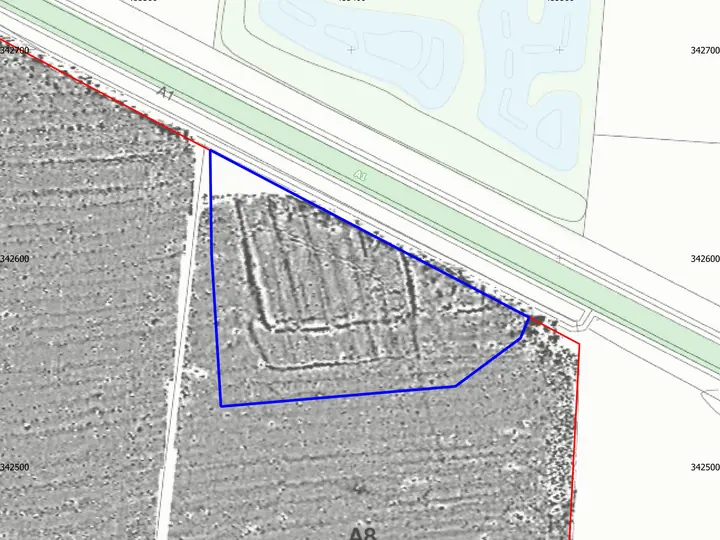
Greyscale geophysical survey plot of fields at Bypass Solar Farm, with an area outlined in blue
Geophysical survey plot, Bypass Solar Farm

Bypass Solar Farm, Lincolnshire

Archaeology Heritage For SEE Renewables

A 50 MW solar farm on farmland west of Foston. Our desk-based assessment flagged potential for prehistoric and Roman remains, so permission came with archaeology conditions.

Our geophysical survey found dense archaeology in one part of the site, and trial trenching confirmed an enclosure of likely Iron Age to Roman date. The layout was redesigned to avoid it, and a mitigation strategy covers the rest.

Enclosure avoided by redesign, not lost to it

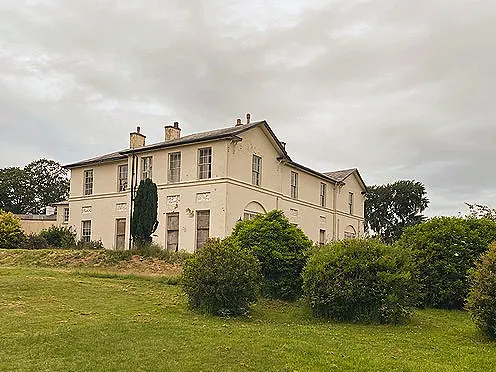
  1. Madeley Manor, a grade II listed mansion of the 1820s, behind lawns and shrubs

    Madeley Manor, near Stoke-on-Trent

    Heritage Appeal

    Six years of heritage advice, an appeal statement and expert evidence at the hearing, for enabling development four miles from the grade II listed mansion of 1822–1825. It will help fund the house’s restoration, including 13 classical reliefs on its walls.

    Allowed at appeal

  2. A circular witches’ mark scratched into old mortar at Pembroke Castle

    Pembroke Castle, Wales

    Archaeology For Pembroke Castle Trust

    Scheduled monument consent, and a method, to take out an unsafe 20th-century concrete floor in the Solar. A site visit with Cadw found a medieval witches’ mark in the mortar, and trial trenching found medieval floors surviving below.

    Floor removed with no damage to the castle

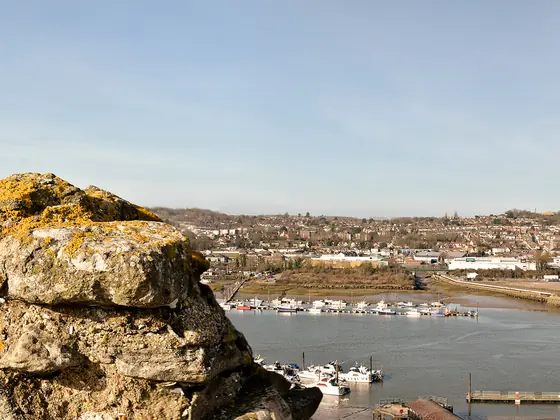
  3. The view across the River Medway to Strood from the keep of Rochester Castle

    Former Civic Centre, Strood

    Landscape Heritage Archaeology Visualisation For Medway Development Company

    195 homes on the Medway, opposite Rochester’s grade I listed castle. Townscape and heritage assessment, archaeology and accurate visual representations, including views from the castle and its grounds.

    Planning consent, 2024

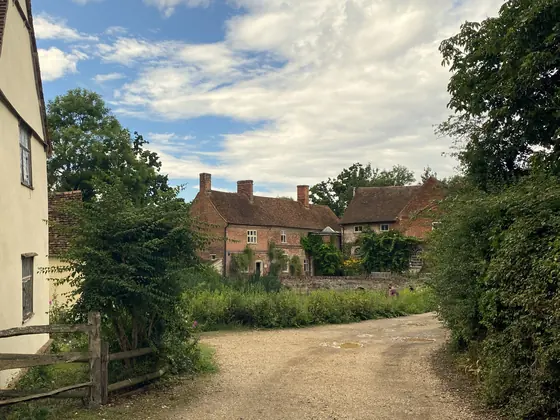
  4. A lane leading to brick buildings at Flatford, in Constable country

    East Bergholt and Flatford, Suffolk

    Heritage For East Bergholt Parish Council

    A new character appraisal and an extended conservation area for John Constable’s birthplace, in the 250th year since his birth: the village, Flatford and the river landscape he painted.

    Adopted unanimously by Babergh councillors, 21 July 2026

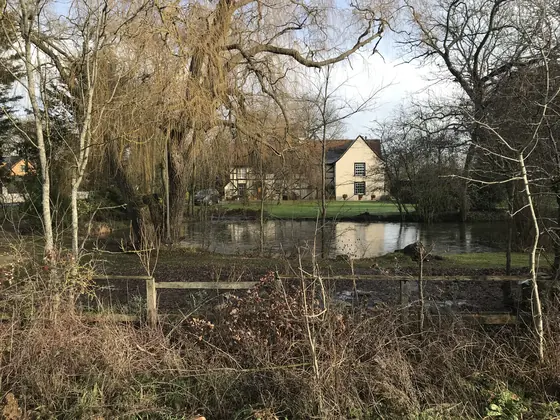
  5. The moat at Laindon Ponds, with the listed farmhouse behind the trees

    Land east of Noak Bridge, Basildon

    Heritage Archaeology Visualisation For Croudace Homes

    Up to 400 homes around a medieval moated manor with an early 17th-century listed farmhouse. Heritage impact assessment, desk-based assessment, geophysics, and visualisations of the setting at intervals up to 30 years.

    Resolution to approve, January 2025

More of our work

More HCUK Group projects, the work we did and the outcome
ProjectOur workOutcome
Campbell Park, Milton KeynesHeritage, for Urban Splash and Glenbrook306 homes beside a grade II registered park and garden
Manor Farm, LeatherheadLandscape and ecology, for Thakeham Homes132 homes with new natural greenspace; planting design after consent
767–785 Commercial Road, LimehouseArchaeology and building recordingAn 18th-century wharf recorded within the build programme, 2019 to 2022
Benfield Valley, HoveHeritage and design reviewSupported at planning committee, April 2025
Manor Farm, Avebury TrusloeHeritage, archaeology, landscape and visualisationConsent inside the World Heritage Site, August 2022
Kilnfield House, Foundry Business ParkEcology, for Govey HomesThe mandatory 10% biodiversity net gain demonstrated
Prospect Park, HarmondsworthEcology, for Cushman and WakefieldHabitat baseline and enhancement plan for a park beside Heathrow
The Mill Hotel, KinghamTrees, landscape and heritagePlanning permission, August 2024
The Wilderness, Carrow Hill, NorwichHeritage, for Ilex HomesFull planning permission, November 2024
Estuary View, WhitstableLandscape design, for Graham Land and DevelopmentConsent July 2024, then the landscape conditions
Our projects

What we are, and what we are not

  • We are six disciplines in one team. Heritage consultants, archaeologists, ecologists, arboriculturists, landscape architects and visualisers, working on the same site at the same time.
  • We are home-working, and have been since 2010. We would rather meet on a video call than spend your day on trains, and we travel when the site needs it.
  • We charge for being good at it. Our fees are based on what we know and what the job needs, not only on the hours it takes.
  • We are not architects. We don’t design buildings, though our landscape architects design landscapes and we advise on design.
  • We are not always the fastest or the cheapest. It needs to be done properly, and what is done well is done soon enough.
  • We are not magicians. If a case can’t be made, we will tell you so, and help you find the alternatives.

The people who will read your site

Thirty-one people, all home-working, as the company has been since it began in 2010. Senior consultants lead each project and take responsibility for their advice.

Heritage 10

  • Sara Davidson, Director, Heritage
  • Jody O'Reilly, Director, Heritage
  • Chris Griffiths, Director, Heritage
  • Dr Paula Jones, Director, Heritage
  • Dr Emma J. Wells, Director
  • Sam Davis, Associate Director, Heritage
  • Jenny Timothy, Associate Director, Heritage
  • Nicola Pickering, Associate Director, Heritage and Townscape
  • Sam Pace, Associate Director, Heritage
  • Juliette Wilson, Associate Director, Heritage

Archaeology 6

  • Charly Vallance, Director, Archaeology
  • Emma Cooper, Associate Director, Archaeology
  • James Danter, Archaeological Manager
  • Rebecca Mansfield, Archaeology Manager
  • Sarah Blacker-Barrowman, Senior Archaeological Consultant
  • Robin Densem, Archaeologist

Ecology 2

  • Jon Hayter, Principal Ecologist
  • Sophie Barrell, Ecology Manager

Landscape and arboriculture 3

  • Claire Browne, Director, Landscape and Townscape
  • Stuart Hocking, Associate Director, Landscape and Arboriculture
  • Romain Bardin, Associate Director, Landscape Design

Visualisation 2

  • Keith Healing, Visualisations Manager
  • Rob Kapitany, Senior Visualiser

Board 3

  • Danielle Morgan, Managing Director
  • Lucy Smith, Board Director
  • Dr Jonathan Edis, Board Director

Operations and support 5

  • Sophie Robertson, Head of HR
  • Ceri Fazackerley, Contracts and Operations Manager
  • Nicoleta Onisoru, Head of Finance
  • Della Duncan, Senior Accounts Administrator
  • Jenny Robson, Accounts Administrator

Checked by the bodies that set the standards

  • Chartered Institute for Archaeologists. Registered Organisation: our archaeology is held to CIfA’s standards and code of conduct. CIfA register entry
  • Institute of Historic Building Conservation. HESPR quality assured for building conservation, conservation planning, historical research and archaeology. IHBC HESPR entry
  • Landscape Institute. Registered Practice, with Chartered Members of the Landscape Institute on the team. Landscape Institute directory entry
  • CIEEM. Registered Practice: our ecologists are full members and hold protected species licences. CIEEM practice directory

Questions we are asked most

Straight answers. If yours isn’t here, call 0330 107 2944 and ask.

Do I need a heritage statement for planning permission?

In most cases, yes, if your proposal affects a heritage asset: a listed building, a conservation area, a registered park or the setting of any of them. Local planning authorities expect a heritage statement to explain what is significant about the asset and how the proposal responds to it, and applications without one are often delayed or refused. More sensitive or complex schemes need a heritage impact assessment, which goes further and tests each impact in detail. Our heritage consultants write both, and we can tell you which one your scheme needs.

When should we bring in heritage, archaeology and ecology advice?

Earlier than most people do: at acquisition, feasibility or concept stage, while the layout can still change. At that point a small adjustment can avoid a redesign, archaeological risk can be priced into the appraisal, and seasonal ecology surveys can be booked into the right windows. Left until the application is ready, the options narrow, survey seasons may already have passed and the fixes cost more. An early conversation tells you which constraints are real and which can safely wait.

Can heritage or archaeology stop a development?

Sometimes, but far more often they shape what is acceptable: the layout, the scale, the design, the programme or the cost. What matters is knowing early where the real constraints sit and how significant they are. At Bypass Solar Farm in Lincolnshire, our geophysical survey and trial trenching found an enclosure of likely Iron Age to Roman date, and the solar layout was redesigned to avoid it rather than the scheme being lost. Some sites do need changes to be supported, and we will say so plainly when that is the case.

When can bat surveys be carried out?

A bat preliminary roost assessment can be done at any time of year. Emergence and re-entry surveys need bats to be active, so the best window is May to August, with restricted surveys possible in September. Activity surveys, by transect and remote monitoring, run from May to September, weather permitting in April and October. Hibernation surveys run from December to February. If a site needs emergence surveys and the summer window is missed, the next one is the following May, which is why it pays to check a site early.

What is biodiversity net gain, and how is it calculated?

In England, most developments must now deliver at least a 10% gain in biodiversity value. It is measured with the statutory biodiversity metric: a baseline habitat survey records what is on the site now, the metric scores it before and after development, and any shortfall is made up with habitat created on site or bought off site. Modelled early, net gain can shape the layout and the landscape scheme. Left late, it often means an expensive off-site solution. We prepare the baseline, the metric, the biodiversity net gain statement and the long-term management plan.

Do you work outside London and the South East?

Yes. We work throughout the UK, mostly in England and Wales, for householders as well as on large schemes in housing, renewables, minerals, infrastructure, leisure, retail and commercial development. Most of our clients are in the private sector, and we have public sector clients too. Our consultants have worked from home since 2010, so we meet by video where we can and travel when the site needs it.

What do you need from us to give a quote?

Usually a site plan, the location and a short description of what you are proposing and what stage the project has reached. If the council or a consultee has already asked for something specific, send that too, along with any reports you already hold. Every quote is based on the site and the level of assessment it actually needs, so the more we know at the start, the more precise the quote can be. The form at the bottom of this page asks for exactly those things.

Our application was refused on heritage grounds. Can you help?

Often, yes. A refusal does not always end a project; it depends on why it was refused. We review the reasons and the officer's report, tell you honestly whether there is a realistic route forward, and if there is, set out the case for an amended scheme or an appeal. Our heritage consultants prepare appeal statements and give expert evidence at hearings and inquiries. At Madeley Manor, near Stoke-on-Trent, we advised for six years and gave evidence at the hearing, and the enabling development was allowed at appeal.

Tell us about your site

Send us the location and what you are planning. We will come back with a clear view of what is likely to be needed, what can wait, and what to do next.

  • A site plan helps, even a rough one
  • Tell us if the council has already asked for something
  • Not sure which disciplines you need? Say so, and we will work it out

Prefer to talk? Call 0330 107 2944 or email info@hcukgroup.co.uk.

Your site
What might it need?
About you