Solar, sized to your bill. Solar panel installers in Essex and the South East since 2010
We’re MCS-certified solar panel installers based in Basildon, fitting panels and batteries for homes and businesses across Essex, Kent, London and the South East. Send us a recent electricity bill: we size the system to what you actually use and put the cost, the saving and the payback in writing before any scaffolding goes up.
Prefer to talk it through? Call 01268 552 868, Monday to Friday, 8.30am to 5pm.
- 4.6Google rating from 109 reviews
- MCScertified installer, NIC2910
- EPVSGold Standard: estimates checked monthly

What size system does your bill need?
Slide to your usual monthly electricity bill. We’ll match a system to it with the same figures our online calculator uses, so you have a fair idea of the cost, the saving and the payback before you speak to anyone.
Find your usual monthly electricity bill below. Each row is matched to a system with the same figures our online calculator uses, so you have a fair idea of the cost, the saving and the payback before you speak to anyone.
Roughly 3,800 kWh a year at today’s price cap.
Your estimate
- System
- 11 panels, 4.57 kWpAbout 22 m² of roof, making about 4,390 kWh a year
- Price guide
- £9,860 to £11,678Fitted, including the 10 kWh battery
- First-year saving
- About £1,070Lower bills plus export payments
- Simple payback
- 9 to 11 yearsSooner if electricity prices rise
Solar panels and batteries carry 0% VAT until 31 March 2027.
Under about £70 a month, solar is slow to pay for itself. If that’s you, we’ll say so on the quote.
Send me a written designHow we work this out
The same figures as our Solar Calculator: 415 W panels taking about 2.04 m² each, priced at £388 to £554 each fitted, £4,968 for a 5 kWh battery, £5,588 for 10 kWh, and 961 kWh a year from each kWp in the South East.
Your bill becomes kWh at the Ofgem price cap for October to December 2026: 26.32p a kWh and 54.83p a day, with no VAT on electricity until 31 March 2027. We size the system to make about 15% more than you use in a year, as our recent installs do, between 4 and 16 panels. East- or west-facing roofs make about 15% less.
Savings: as our calculator does, we count 60% of the solar that matches your use as used at home without a battery, 80% with 5 kWh and all of it with 10 kWh, and pay surplus exports at 12p, a typical Smart Export Guarantee rate today. Payback is the price divided by the first-year saving, with no price rises.
Your written quote replaces every one of these with your roof, your real usage and MCS methods.
| Monthly bill | System | Price guide | First-year saving | Payback |
|---|---|---|---|---|
| £70 | 7 panels, 2.90 kWp | £8,306 to £9,463 | About £680 | 12 to 14 years |
| £100 | 11 panels, 4.57 kWp | £9,860 to £11,678 | About £1,070 | 9 to 11 years |
| £150 | 16 panels, 6.64 kWp | £11,802 to £14,446 | About £1,640 | 7 to 9 years |
| £200 | 16 panels, 6.64 kWp | £11,802 to £14,446 | About £1,680 | 7 to 9 years |
Prices and savings use the figures in our Solar Calculator and the Ofgem price cap for October to December 2026; payback is the price divided by the first-year saving. Your written quote replaces every figure with your roof and your real usage.
The sums, checked against real roofs
An estimate is only worth something if it comes true. As EPVS Gold Standard members, our performance figures are monitored every month for accuracy. Our customers keep score too.
“A target that was achieved exactly as projected.”
Six recent homes and what we predicted
| Home | System | Battery | First-year saving | Payback | |
|---|---|---|---|---|---|
 | Basildon, Essex14 Aiko Neostar 470 W, Project EV chargerCase study | System6.58 kWp | Battery9.4 kWh | First-year saving£1,372 | Payback7 years |
 | Havering, Essex20 Aiko Neostar 450 WCase study | System9.0 kWp | Battery9.4 kWh | First-year saving£1,394 | Payback8 years |
 | Stanford-le-Hope, Essex13 Aiko Neostar 450 W, flat roof, bird meshCase study | System5.85 kWp | Battery9.4 kWh | First-year saving£1,116 | Payback8 years |
 | Basildon, Essex14 Aiko Neostar 450 W, bird meshCase study | System6.30 kWp | Battery9.4 kWh | First-year saving£1,103 | Payback8 years |
 | Sissinghurst, Kent33 Aiko Neostar 470 W, ground-mountedCase study | System15.51 kWp | Battery9.4 kWh | First-year saving£2,369 | Payback9 years |
 | Sidcup, south-east London10 Aiko Neostar 450 WCase study | System4.50 kWp | Battery5.12 kWh | First-year saving£858 | Payback13 years |
Sidcup is the slow one at 13 years. That home uses about 3,056 kWh a year, well under average, so there is less to save. The case study says so plainly, and we’d tell you the same before you sign. Figures are the predictions published in our Case Studies, not guarantees.
From your bill to your roof in two to six weeks
Most homes are generating within two to six weeks of the survey. The fitting itself usually takes a day.

Day one
Send a bill, or just your postcode
We look at your roof on satellite imagery and model it in 3D, usually within a day or two of hearing from you. A visit is there if you’d rather talk it through at home.
Within two weeks
A written design and quote
Panel layout, yearly generation, saving, payback and battery options, all on paper. If you go ahead, a surveyor checks the roof, the cable route and where the inverter and battery will go, usually in under 90 minutes.
Before fitting
We handle the DNO
Systems over 3.68 kW need G99 approval from your Distribution Network Operator. We apply and chase it for you. At the moment, approvals average 30 to 35 days.
Install day
Fitted in a day
Scaffold goes up a day or two before. A roofer and two electricians fit most homes in a single day, and your panels start generating the same day.
Handover
Paperwork done for you
You get your MCS certificate, electrical certificate and DNO approval, ready for a Smart Export Guarantee tariff that pays for what you send to the grid.
Years later
Still answering the phone
Our own Customer Support Helpdesk handles questions and faults after the install. Reviewers mention the office line being answered within two rings.
When the sun sets, the battery takes over
Panels make most of their electricity around midday, often while everyone is out. A battery keeps that surplus for the evening, when the kettle, the oven and the television come on, so you buy less from the grid when it costs the most.
- Most of our recent home installs pair the panels with a 5.12 kWh or 9.4 kWh battery.
- We fit Hanchu ESS and Voltsmile batteries, and Project EV chargers if there’s an electric car on the drive.
- Use the estimate above to compare no battery, 5 kWh and 10 kWh on your own bill.

Schools, churches and golf clubs put it in writing
Commercial roofs come with people underneath: pupils, congregations, members and staff. These organisations wrote to recommend us on their own letterheads.
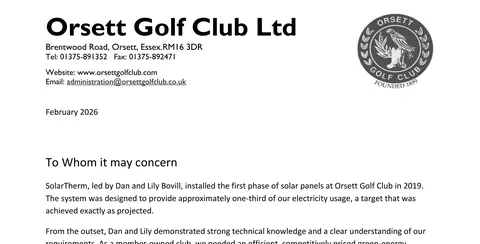
“a target that was achieved exactly as projected”
Orsett Golf ClubRay Smallcombe, Financial Director, Orsett, Essex, February 2026. First system, 2019: designed to cover about a third of the club’s electricity. 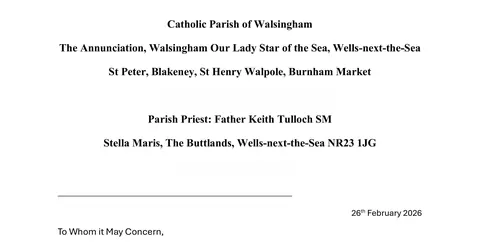
“They ceased work every day whilst the morning Mass was celebrated”
Catholic Parish of WalsinghamWalsingham, Norfolk, 26 February 2026. Replaced a failed inverter, found a third of the 20-year-old panels had stopped working, then fitted new ones while the church stayed in use. 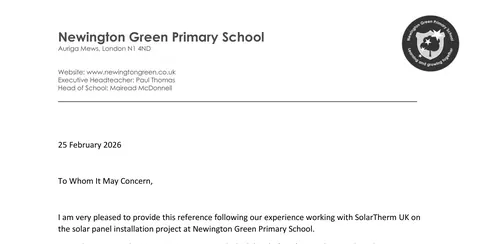
“delivered efficiently, on schedule, and to a high technical standard”
Newington Green Primary SchoolIslington, London, 25 February 2026. A community-funded flat-roof system, fitted in a working school. 
“the technicians always turned up at the right times”
Sawbridgeworth Cricket ClubAndrew Meadmore, Sawbridgeworth, Hertfordshire, 2 March 2026. 48 panels, 24 facing east and 24 west, plus batteries, fitted in three phases over two years. 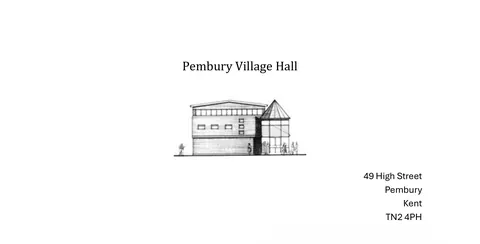
“provided us with all the facts and figures we requested”
Pembury Village HallPembury, Kent, March 2026. A lengthy decision, now panels and a battery powering the hall. 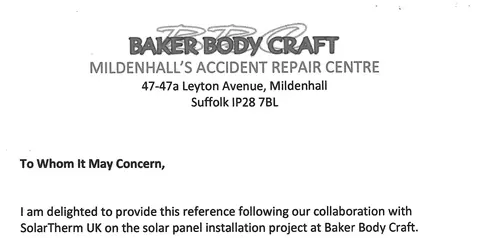
“The project caused minimum disruption to our working day.”
Baker Body CraftDavid Baker, Mildenhall, Suffolk. A 52.20 kWp system on a working accident repair centre.


Recent commercial work
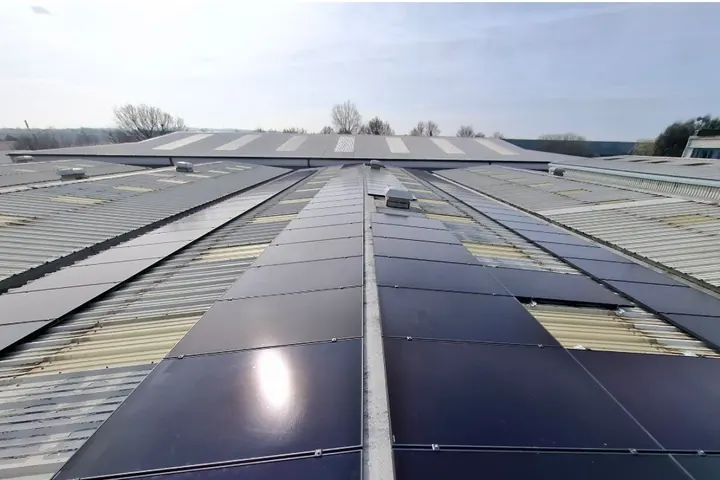
AquAid
50 kWp commercial roof. 47,638 kWh a year, £12,861 predicted first-year saving, 9-year payback.
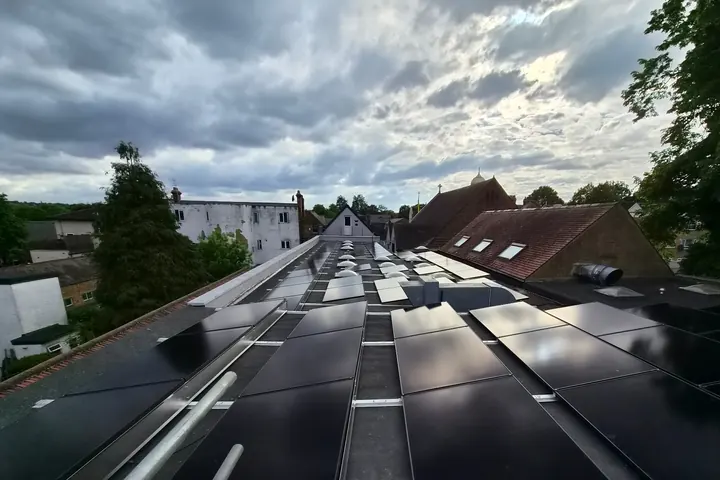
Nanak Darbar, North London
30.6 kWp, 68 Aiko panels, Sofar three-phase hybrid inverter. £6,099 estimated first-year saving.
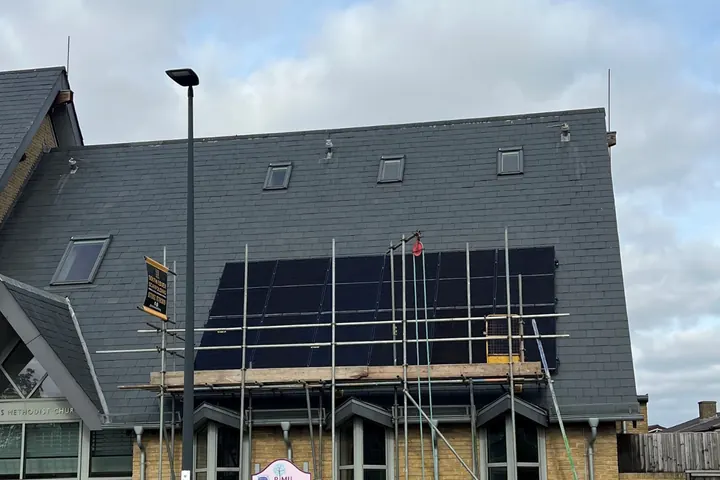
Sunfields Methodist Church, Greenwich
28 Amerisolar 410 W panels, Solis hybrid inverter, 20.48 kWh Voltsmile battery. £2,669 first-year saving, 7-year payback.


Check us before you call us
Solar is a 30-year purchase, so check who is fitting it. Each scheme below keeps a public register, and our numbers are here so you can look us up.
| Scheme | What it means for you | Our number |
|---|---|---|
| MCS certified | Independent certification of the installer and the kit. You need it to be paid for exported electricity under the Smart Export Guarantee. | NIC2910 (opens the MCS register) |
| HIES member | A consumer protection scheme for home energy installs, with annual vetting of members against its code of practice. | SCE/A/0076 (opens the HIES register) |
| EPVS Gold Standard | Monthly monitoring that members’ performance estimates and savings figures are accurate and clearly explained. | 15320032471198 (opens the EPVS register) |
| TrustMark registered | The government-endorsed quality scheme for work in and around the home. | Registered (opens the TrustMark register) |
| NICEIC certified | Assessed electrical contractor; the wiring side of every install is certified. | NIC2910 (opens the NICEIC register) |
| FCA authorised | Authorised and regulated by the Financial Conduct Authority as a credit broker, not a lender. | 677409 (opens the FCA register) |
Also: CHAS (CHAS-0005409), Constructionline Gold (91709), Alcumus SafeContractor (DL0117), REFCOM F-Gas (REF1018351).
Awards
- Winner, Sustainability Award, Essex Regional Awards, Business Awards UK
- Highly commended, Small Scale Project, East of England Energy Efficiency Awards
- Highly commended, Large Project (over £250k), London Energy Efficiency Regional Awards
- Winner, RHI Installer of the Year, East of England Energy Efficiency and Healthy Homes Awards
What people say once the scaffolding comes down
Scores checked on 10 October 2026.
“No major sales pitch, no upselling”
Helen H., Trustpilot, September 2026 “customer care landline always answers with 2 rings”
Darron F., Trustpilot, September 2026 “Everything was coordinated impeccably and worked like clockwork.”
Robert C., Trustpilot, September 2026 “very detailed review and design of the plan”
Stuart H., Trustpilot, August 2026 “The installation team were great, quick, neat and tidy.”
Nick P., Trustpilot, August 2026 “the customer service team responded immediately”
Verified customer, Trustpilot, August 2026
Common questions about solar panels
Straight answers, most of them from our Solar Knowledge Base. Anything else, ask on 01268 552 868.
How much do solar panels cost for a house in Essex?
Most homes we fit come to between £4,000 and £12,000 or more, depending on the number of panels, the roof, the scaffolding and whether you add a battery. Our online calculator prices panels at £388 to £554 each fitted, a 5 kWh battery at £4,968 and a 10 kWh battery at £5,588, so 10 panels with a 5 kWh battery come to roughly £8,850 to £10,500.
Your written quote is priced for your roof and your bill, with the payback shown next to the price. Finance is available from our panel of lenders, subject to status.
Do solar panels work in winter and on cloudy days?
Yes. Panels run on daylight rather than direct sunshine, so they keep generating under cloud and through the winter, just less. In the South East a system usually makes 60 to 75% of its year’s electricity between April and September. A typical 4 kW system might make 15 to 20 kWh on a good summer day and 2 to 6 kWh on an average winter day.
That is why we size systems on a full year’s generation, and why a battery earns its keep in winter: it stores the short midday peak for the evening.
Do I need planning permission for solar panels?
Usually not. Panels on most homes are permitted development, provided they stand no more than 200mm proud of the roof slope. A listed building needs Listed Building Consent, and conservation areas, flat main roofs and ground-mounted arrays need more care: a ground-mounted system over 9 m², taller than 4 metres or within 5 metres of the boundary normally needs planning permission.
Building Regulations apply either way, and our MCS certificate and electrical sign-off cover them. We check your property before we quote.
How long does solar panel installation take?
The fitting itself usually takes a day. Scaffold goes up a day or two before, then a roofer and two electricians fit the panels, inverter and battery, test the system and switch it on, so most homes generate on install day.
From survey to switch-on is typically two to six weeks. The longest wait is often the DNO: a system over 3.68 kW needs G99 approval from your local network operator, which has recently averaged 30 to 35 days. We submit it and chase it for you.
Does my roof need to face south?
No. A south-facing roof at a 30 to 40 degree pitch produces the most, but east- and west-facing roofs typically make 80 to 90% as much over a year, and they spread generation into the morning or evening when many homes use more. Sawbridgeworth Cricket Club runs 24 panels facing east and 24 facing west for exactly that reason.
Flat roofs can be angled towards the sun on a mounting frame. North-facing roofs generate much less, and we will say so if yours is not worth it.
Should I add a battery to my solar panels?
If the house is empty during the day, usually yes. Panels peak around midday, so without a battery much of what they make is exported for a lower rate than you pay to import. A battery stores that surplus for the evening.
Our calculator assumes you use about 60% of your matched solar without a battery, 80% with 5 kWh and all of it with 10 kWh, and the estimate above shows what that means for your bill. A battery adds cost, so the payback can be a little longer, which is why we show both options side by side.
How long do solar panels last?
Modern panels last a minimum of 30 years, and many keep going well beyond that. They do not fail suddenly: output drops slowly, by around 0.3 to 0.8% a year, so good panels still deliver 80 to 90% of their original output after 25 years.
Inverters typically last 10 to 15 years, so plan for one replacement, and batteries carry 10 to 15-year warranties depending on use. Our helpdesk looks after the system after installation, and we recommend a professional test every five years.
Can I spread the cost, or get a government loan?
Yes. We are a credit broker, not a lender, and can offer finance from a panel of lenders; credit is subject to status and affordability. Solar panels and batteries also carry 0% VAT until 31 March 2027.
The government’s Warm Homes Loan Scheme is designed to cut the interest rate on loans of up to £15,000 for solar panels and £15,000 for a battery, for owner-occupiers and landlords, and only for systems fitted by an MCS-certified installer like us. As of October 2026 it has not opened to households and no rates have been published, so ask us and we will tell you when it does.
Get your free design and quote
- A designer looks at your roof on satellite imagery, usually within a day or two.
- You get a written design with the cost, the saving and the payback.
- No hard sell. If solar won’t pay for itself on your roof, we’ll tell you.
Monday to Friday, 8.30am to 5pm
info@solarthermuk.co.uk
The Energy Centre, 2-4 Howard Chase, Basildon, Essex SS14 3BE
0% VAT on solar panels and batteries ends on 31 March 2027. Spreading the cost? We’re a credit broker, not a lender, and can offer finance from a panel of lenders. Credit is subject to status and affordability.