Painting · Gilding · Conservation · Decoration

Decorators & gilders to Britain’s great buildings

Since 1987 our painters, gilders and conservators have restored, and created, the decorative finishes of palaces, galleries, livery halls, theatres and London’s finest homes.

Or call our Kensington office on 020 7833 8806

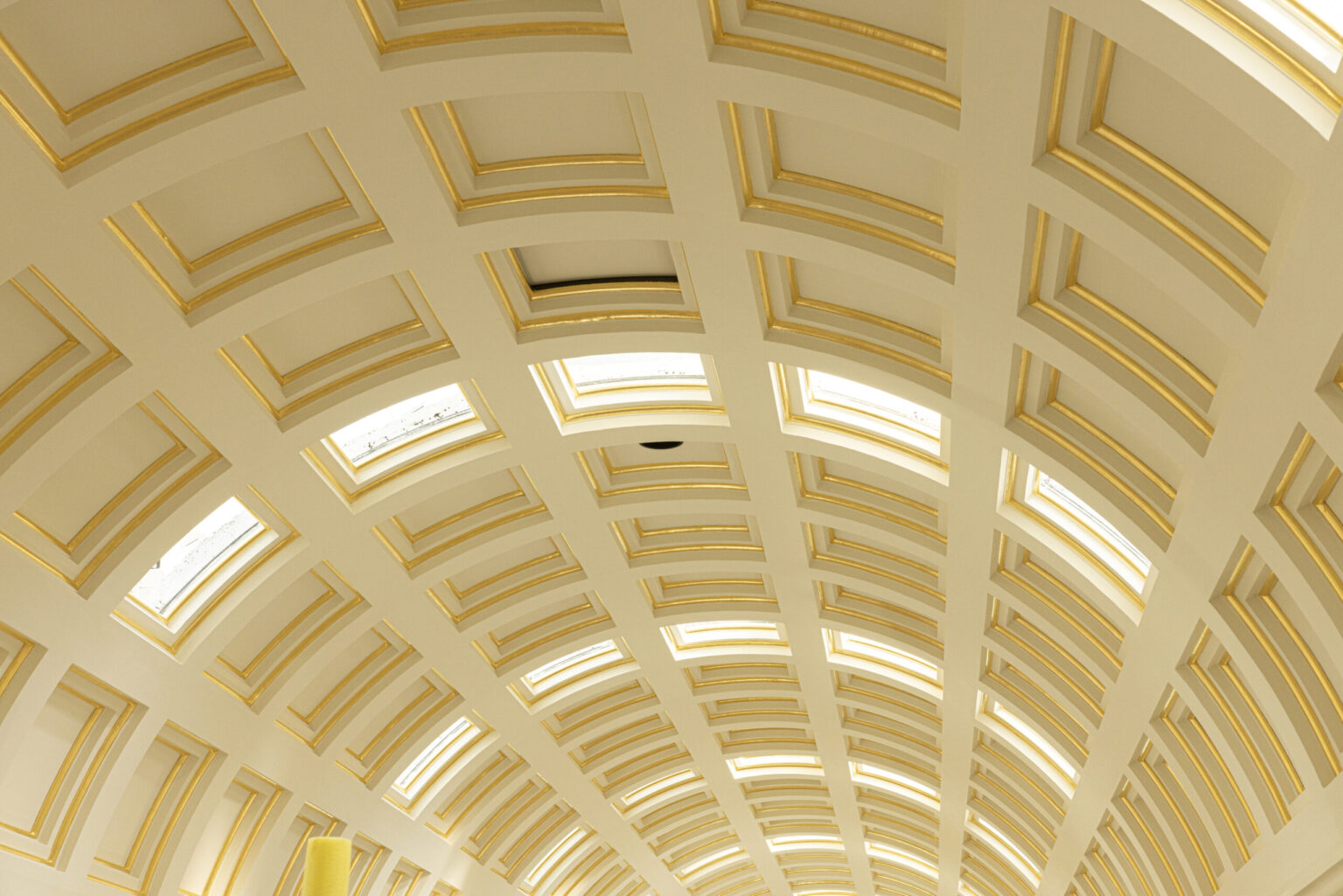
The coffered, gilded barrel vault of Room 29 at the National Gallery after redecoration by Hare & Humphreys
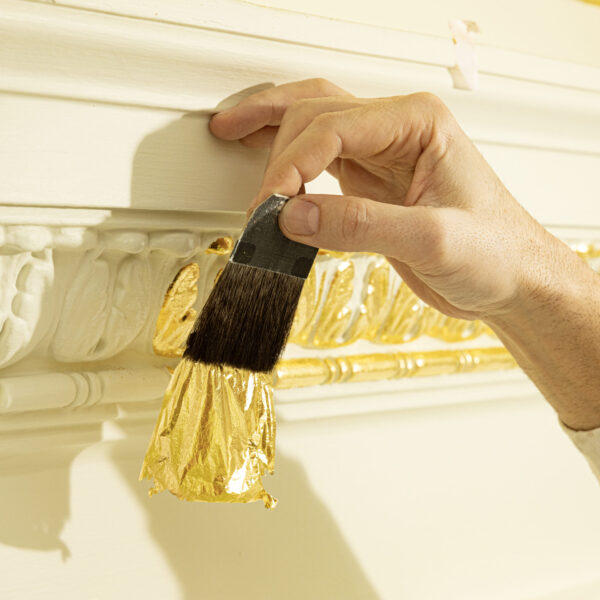
A gilder’s brush lifting a leaf of gold
National Gallery, Room 29Decoration & gilding
  • 1987Founded in London, nearly four decades of hand craft
  • 2001Awarded the Royal Warrant for our work at Windsor Castle
  • 40+ yrsCaring for the Drapers’ Company’s hall in the City
  • 20Distinctive finishes, from water gilding to tadelakt

Trusted inside

  • The National Gallery
  • Spencer House
  • Lancaster House
  • The Albert Memorial
  • Royal Opera House
  • The Great Pagoda, Kew
  • Drapers’ Hall
  • Stationers’ Hall
  • Dulwich Picture Gallery
  • Pitzhanger Manor
  • The British Embassy, Paris
  • Richmond Theatre
  • Annabel’s
  • Hotel L’Oscar
  • Twenty Grosvenor Square
  • Cartier

I.Why it matters

Historic surfaces only get one chance.

Seal lime plaster under modern paint and it traps moisture and fails. Lay gold leaf on poor preparation and it won’t last. Paint over a scheme nobody has researched and two centuries of evidence disappear for good.

New interiors raise the stakes differently: a finish has to look extraordinary the day it’s revealed and still look right in twenty years. It’s why Spencer House, Lancaster House and the Drapers’ Company have trusted us for decades.

  1. Evidence before brushwork

    Architectural paint research shows exactly what was there: colours, materials and dates. Restoration becomes faithful, not guesswork.

  2. Twenty finishes, one team

    Water and oil gilding, graining and marbling, trompe l’oeil, polished plaster and more, all from our own painters, gilders and conservators.

  3. At home on complex sites

    We slot into live programmes alongside architects, designers and main contractors, from Purcell and Avanti Architects to Willmott Dixon Interiors and Multiplex.

  4. Cared for after handover

    Tailored maintenance programmes keep every installation looking just finished, which is why some of our client relationships now span four decades.

II.Selected work

Some of the rooms we’ve been trusted with

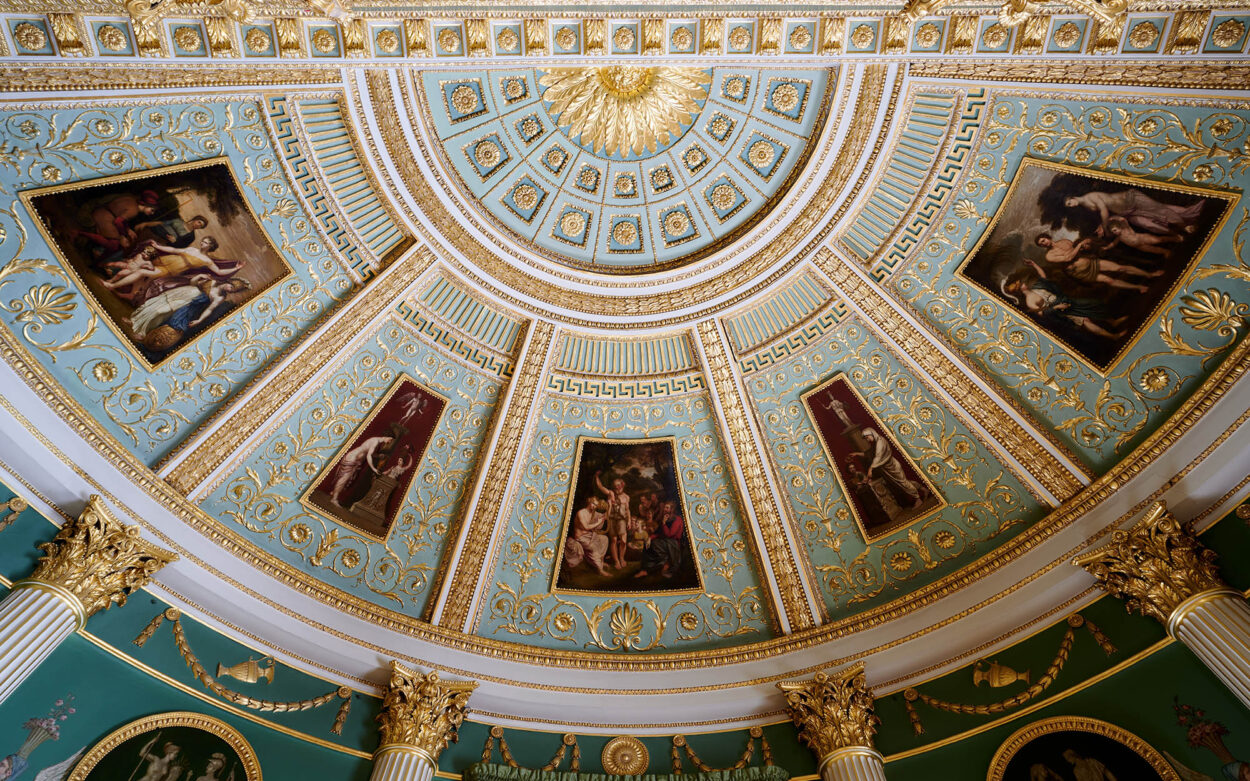
Painted and gilded ceiling at Spencer House, recreated to its 1790s scheme

Heritage · St James’s, London

Spencer House

State rooms subdivided by decades of tenants, returned to their original splendour. Using paint research and the Spencer family archives, we recreated the paint and gilding scheme of the 1790s under the direction of David Mlinaric, the start of a relationship that continues today.

Finishes
Paint research, gilding, painting
Designer
David Mlinaric
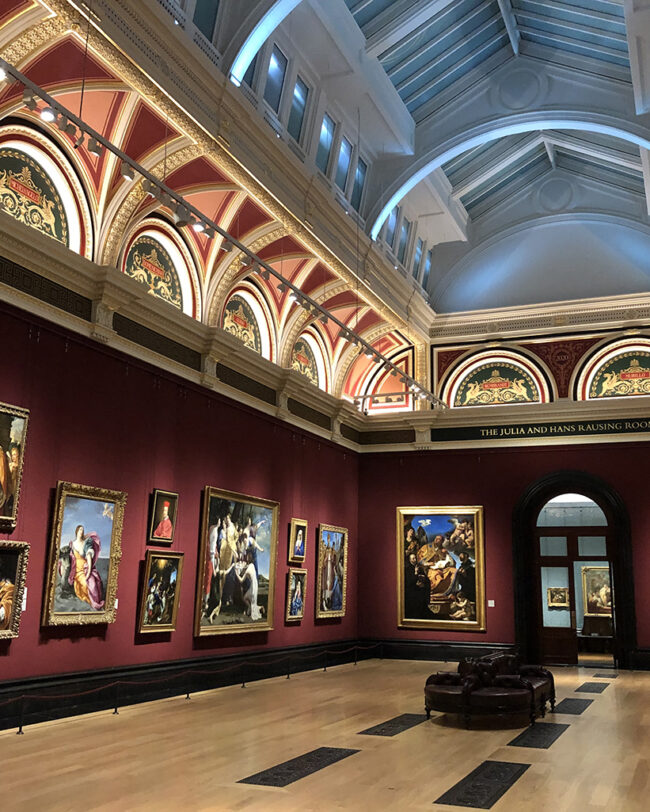
Room 32 at the National Gallery, with dark red walls beneath a painted and gilded frieze

Heritage · Trafalgar Square

National Gallery, Room 32

The gallery’s largest room, returned to architect E. M. Barry’s original scheme, its frieze and lunettes of winged lions and dolphins reinstated.

Finishes
Gilding, stencilling
With
Purcell · Willmott Dixon Interiors
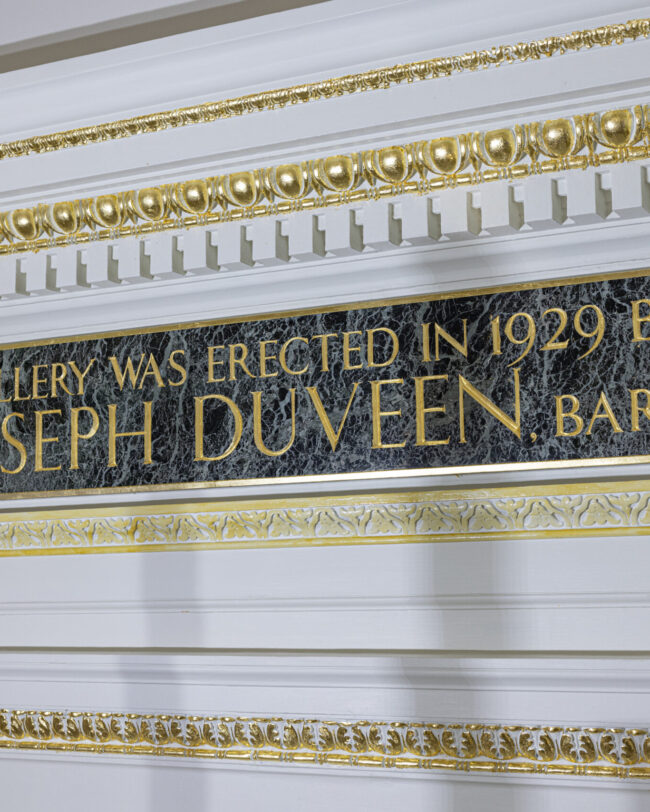
Gilded inscription on the frieze of Room 29 at the National Gallery

Heritage · Trafalgar Square

National Gallery, Room 29

A 1929 barrel-vaulted ceiling, painstakingly prepared and redecorated, with new gilded detail to the lower cornice developed with the architects.

Finishes
Decoration, gilding
With
Avanti Architects · CBRE
Newly gilded wrought-iron balustrade at the Albert Memorial

Heritage · Kensington Gardens

The Albert Memorial

Nearly 150 metres of ornate wrought-iron balustrade, set between the marble groups of the continents, cleaned, prepared and redecorated in a rich red, with extensive gilding to every face.

Finishes
Gilding, stencilling
With
Howat O’Farrell Architecture · Stonewest

Heritage · Kew Gardens

The Great Pagoda, Kew

The Pagoda’s 80 dragons were removed in 1784 and never seen again. When they finally returned in 2018, our gilders brought the new dragons to life.

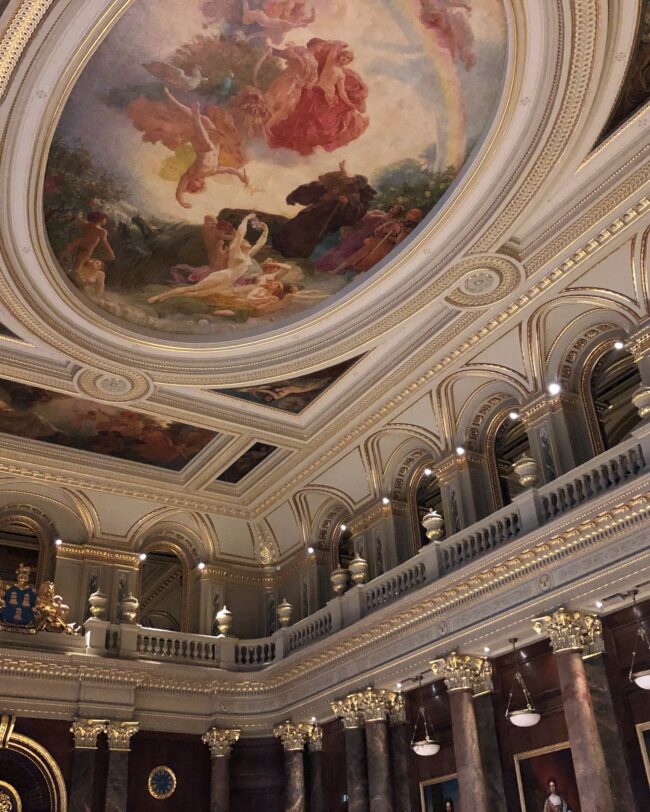
The ornate painted ceiling of the Livery Hall at Drapers’ Hall

Heritage · City of London

Drapers’ Hall

Four decades restoring and maintaining the Drawing Room, Court Room, Court Dining Room and Livery Hall, and now a new colour scheme for the Livery Hall, informed by architect Sir Thomas Graham Jackson.

Finishes
Gilding, trompe l’oeil, stencilling, heraldry
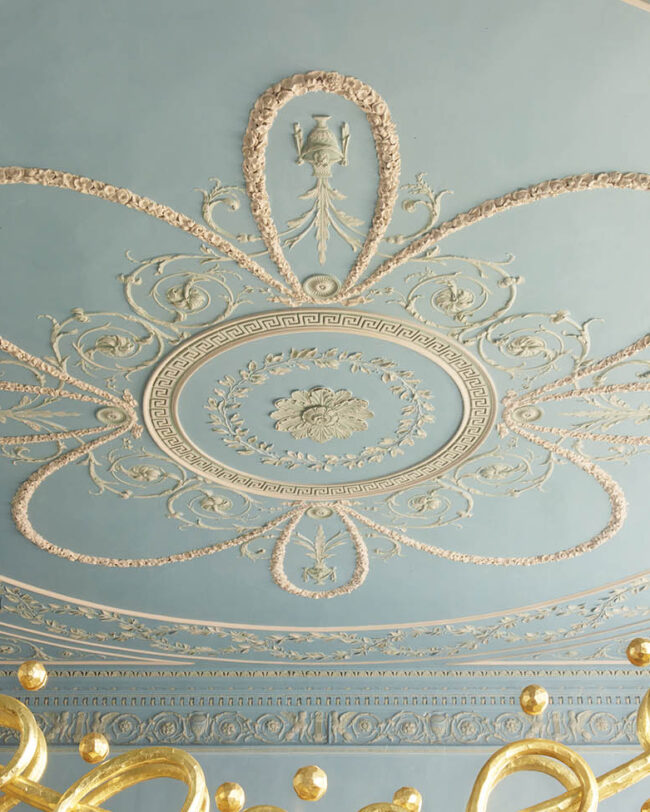
Pale blue ceiling with gilded ornament in a private apartment at The Albany

Private residence · Piccadilly

The Albany

Specialist paint finishes for an apartment designed by Francis Sultana, where pale grounds set off finely gilded ornament.

Designer
Francis Sultana
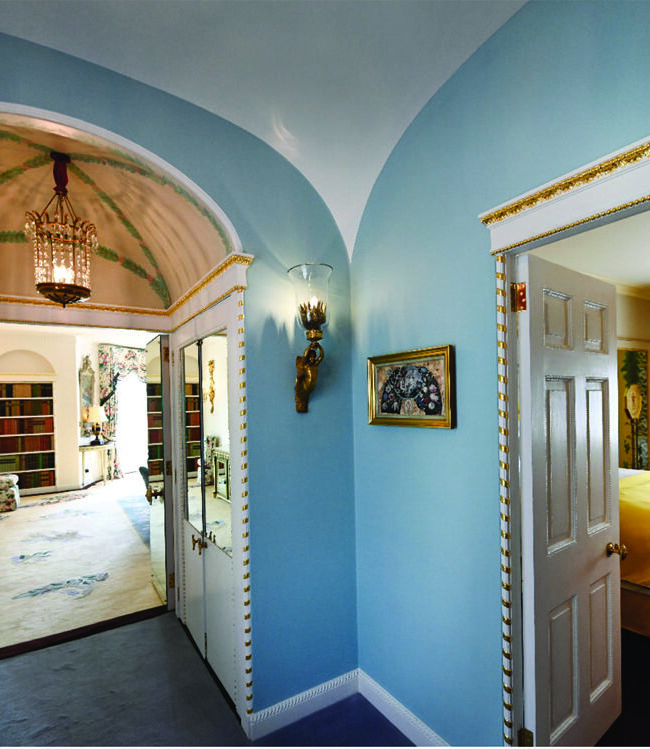
Arched hallway decorated in sky blue with a gilded lantern in a London private residence

Private residence · London

Private residences

From Hanover Lodge in Regent’s Park, with Quinlan & Francis Architects and Walter Lilly, to 21 Young Street in Kensington, we work quietly and meticulously in some of London’s finest homes.

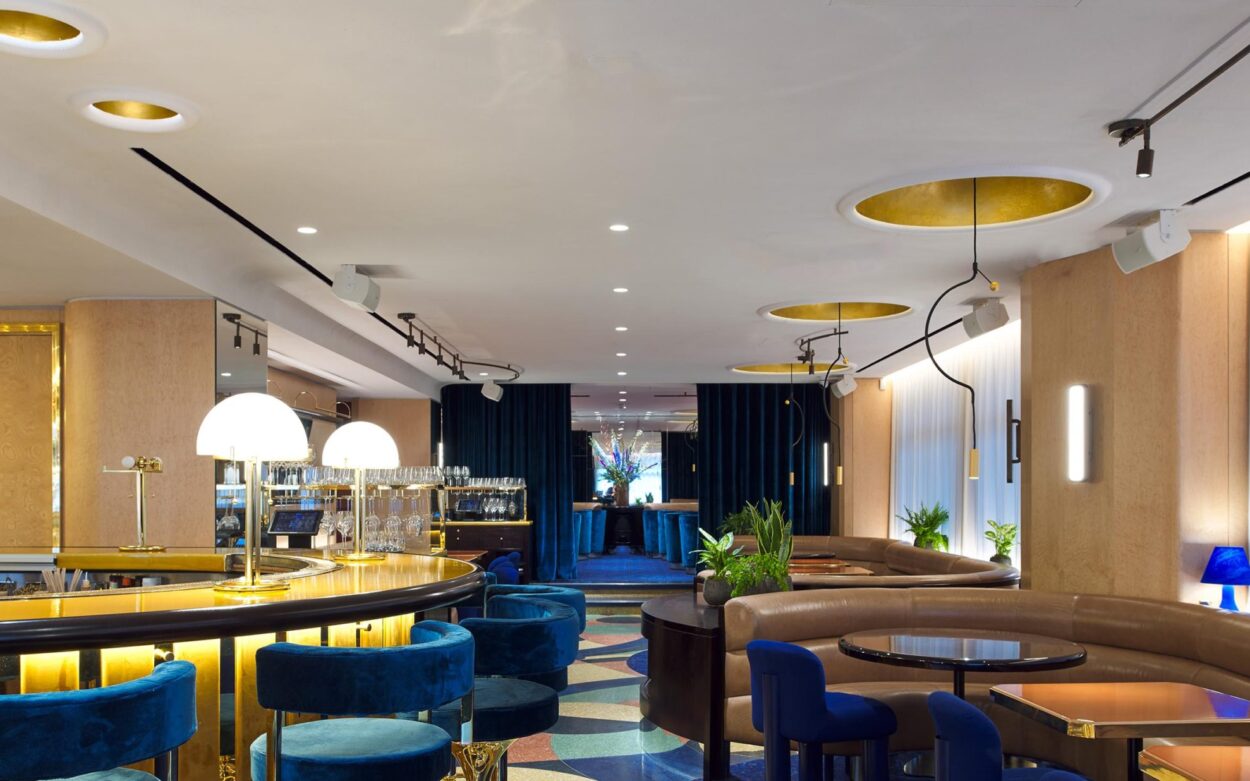
The dining room at Folie restaurant

Hospitality · London

Restaurants, clubs & hotels

Finishes built to survive service and still look extraordinary: leather panels and murals at Annabel’s for MBDS and at Hotel L’Oscar for Jacques Garcia, and polished plaster for the spa and pool at Twenty Grosvenor Square for Finchatton.

Also
Folie · Cartier · Mercato Metropolitano

Hospitality · Theatres

Theatres & opera

The Royal Opera House, the Apollo, Dominion and Aldwych theatres, and in 2025 the sensitive repair of the water-damaged foyer ceiling at Frank Matcham’s Grade II-listed Richmond Theatre.

Thank you very much to you and your team for being so professional and helpful right up to the end with WDI and beyond with us directly during the lockdown.

Estates Manager, National GalleryRoom 32, delivered with Willmott Dixon Interiors (WDI)

III.What we do

From paint research to the final leaf of gold

Every commission is different, so every project starts with a conversation. Most draw on several of these disciplines at once, delivered by one accountable team.

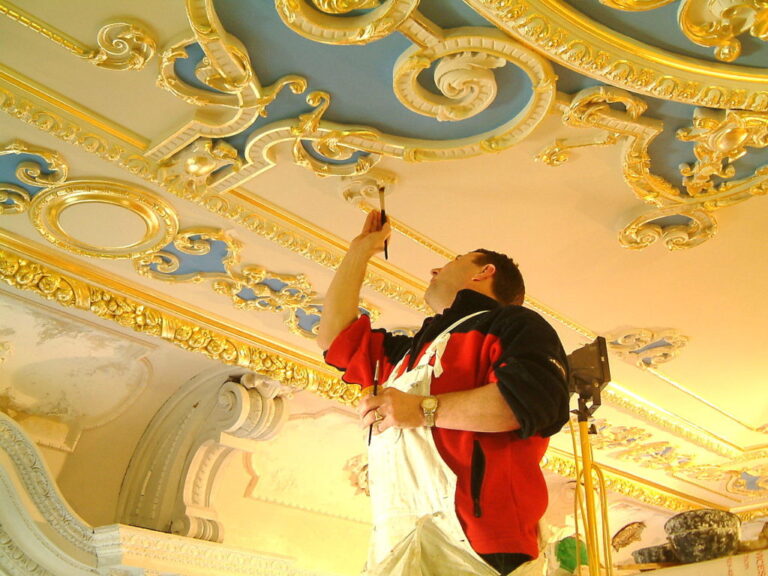
A decorator gilding an ornate ceiling in the banqueting room at Hylands House

Restoration & conservation

Historic schemes revived after time, decay or disaster: painted surfaces, gilding and plasterwork, using traditional techniques to contemporary conservation standards.

At Stationers’ Hall, completed in 1673, we redecorated and gilded the livery hall’s elaborate ceiling in 23.5-carat gold leaf and conservation-cleaned its central canvas.

Discuss a restoration
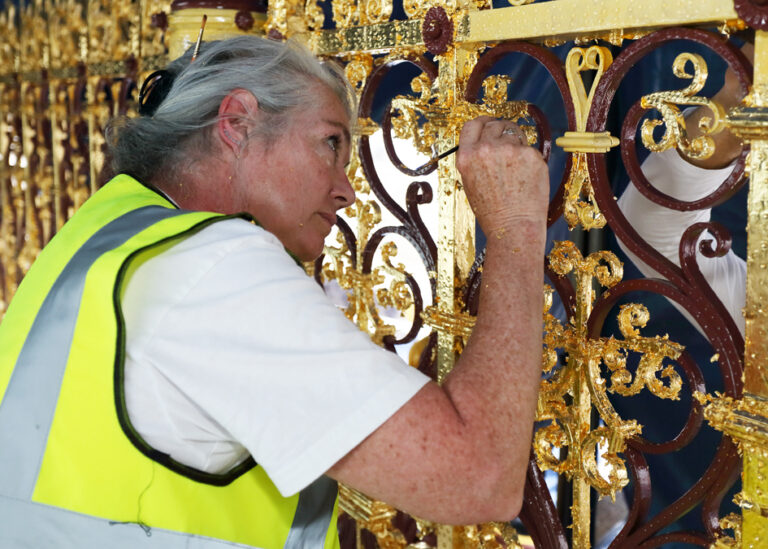
A gilder applying gold leaf to the Albert Memorial balustrade

Gilding

Water gilding for a rich, burnished brilliance, oil gilding for durability and bespoke antique patinas, from delicate highlights to whole architectural schemes.

At Lancaster House we have redecorated and gilded the Grand Hall and Staircase, the Long Gallery, the State Drawing Room and the Gold Room.

Talk to our gilders
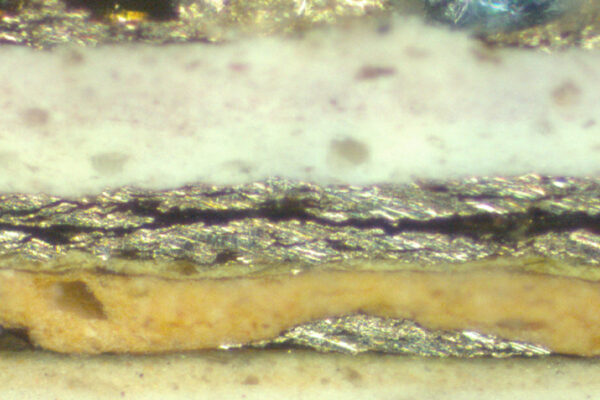
Magnified layers of historic paint revealed by architectural paint research

Architectural paint research

Microscopic and chemical analysis of paint layers to reveal a building’s original colours, materials and dates: the evidence base for faithful restoration.

At Spencer House, paint research and the family archives guided our recreation of the 1790s scheme.

How paint research works
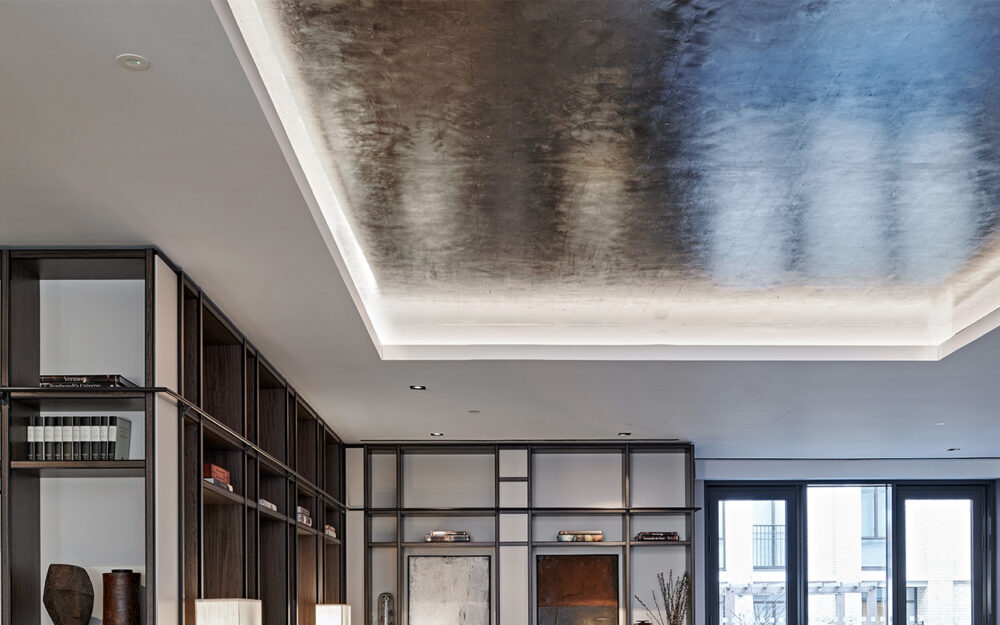
A contemporary living space beneath a shimmering metallic-leaf ceiling

Finishes for new interiors

For designers, architects and private clients: polished and Venetian plaster, tadelakt, leather, lacquer and murals, sampled in our studio and made for your scheme.

Trusted by Jacques Garcia, MBDS, Francis Sultana and Finchatton.

Explore the finishes
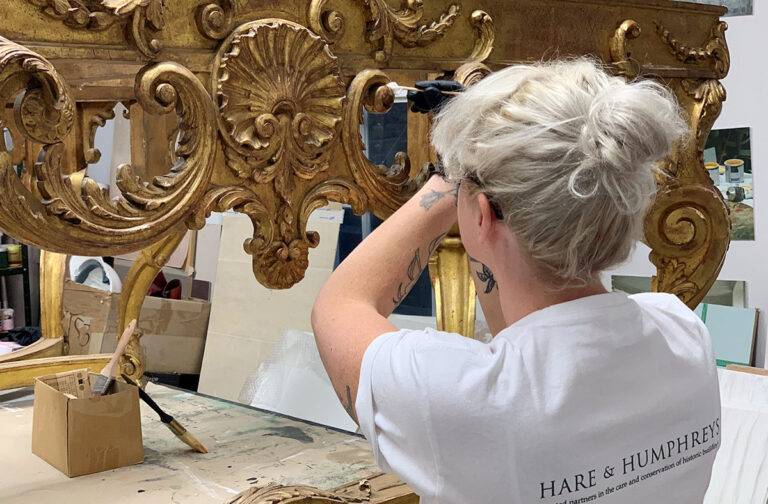
A conservator restoring the gilding of an ornate carved mirror frame in the workshop

Artwork & furniture restoration

Gilded mirrors, frames, consoles and painted furniture brought back to life in our workshop, with the same care we give to a state room.

Ask about a piece
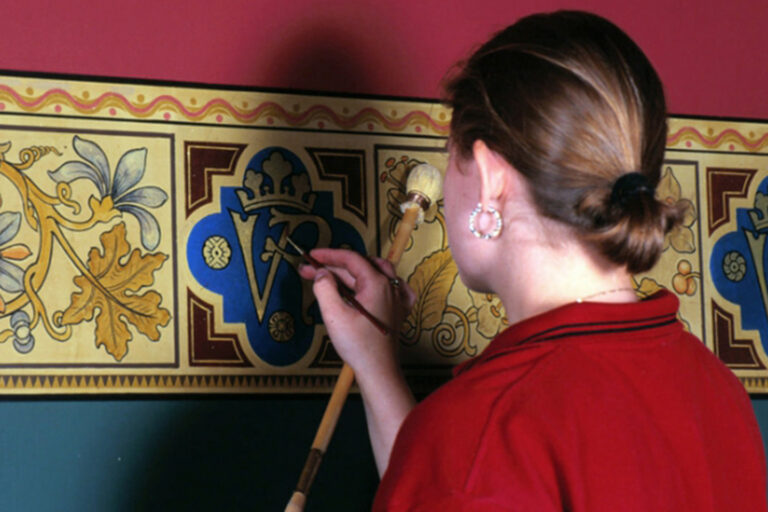
A decorative painter hand-painting a heraldic motif in blue and gold

Colour & technique consultancy

Advice on historically appropriate colour schemes and decorative painting techniques, for institutions, designers and fellow craftspeople.

We’re developing a new Livery Hall scheme with the Drapers’ Company, true to the spirit of the original design.

Book a consultation

IV.Distinctive finishes

Twenty finishes. One atelier.

Every finish here is made by hand, and every one can be sampled in our studio before a brush touches your walls. Choose a swatch to learn more.

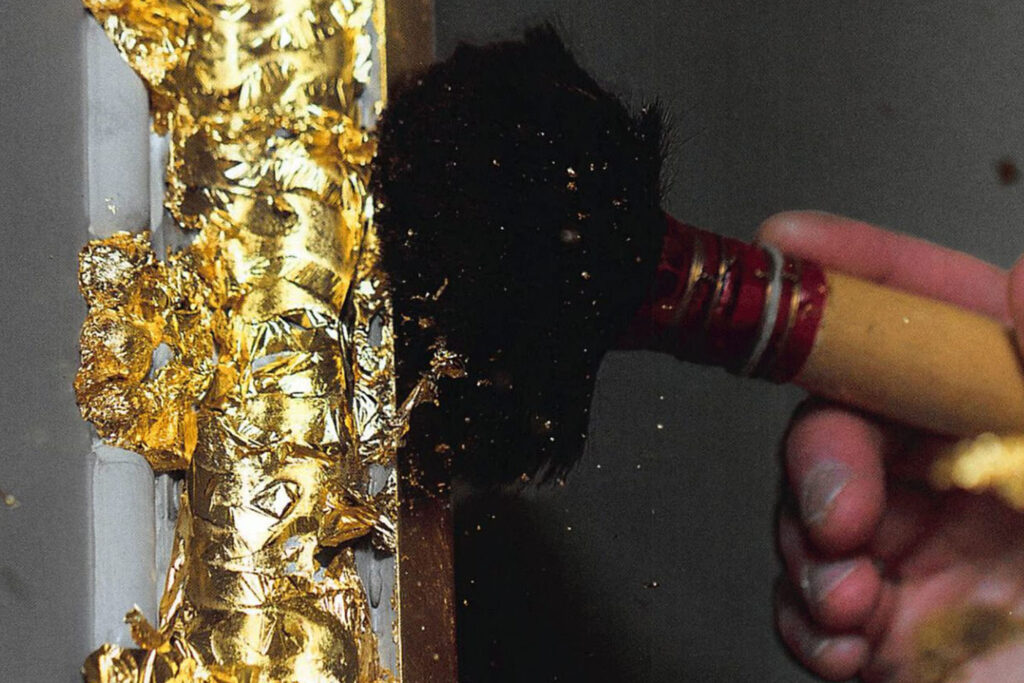
A gilded column being finished with a brush, flecks of gold leaf in the air

No. 01 · Metal & leaf

Gilding

Water gilding for a rich, burnished brilliance, oil gilding for durability, and bespoke antique patinas, using genuine gold leaf such as the 23.5-carat leaf we laid at Stationers’ Hall.

Seen at Lancaster House, the Albert Memorial, Stationers’ Hall

Request a sample

Swatches are illustrative. Real samples are made by hand in our Acton studio, to your colours and your light.

V.Architectural paint research

Read the layers before you touch them.

Every painted surface keeps a record of its past. Our paint analysts take tiny samples, read them in cross-section under the microscope and identify the pigments and binders in each layer, revealing original schemes, later changes and the materials earlier craftsmen used.

  1. 01

    Sampling

    Tiny samples from carefully chosen locations, inside and out.

  2. 02

    Cross-section microscopy

    Each layer read in sequence, like the rings of a tree.

  3. 03

    Pigment & binder analysis

    What was used, and roughly when.

  4. 04

    Exposure windows

    Areas uncovered on site to confirm the evidence.

  5. 05

    Report & specification

    A clear record every stakeholder can work from.

At Pitzhanger Manor we sampled every surface to recreate Sir John Soane’s schemes, overpainted in the 1830s. At Dulwich Picture Gallery, paint analysis inspired a new stone-coloured scheme for Soane’s Mausoleum, and we repaired its faux porphyry columns.

Illustrative paint cross-section Six layers of paint seen under the microscope, from the lime plaster substrate to a modern emulsion on top.
Illustrative cross-section. Hover or tap a layer to trace a room’s history.

VI.Who we work with

A safe pair of hands on every side of the project

Evidence you can specify from

Paint research, sampling and clear specifications, with craftspeople who respect the historic fabric of the building. We supply the findings and reports that conservation management plans and funding applications rely on.

Worked alongside

Purcell · Avanti Architects · Julian Harrap Architects · Jestico + Whiles · Howat O’Farrell Architecture · Quinlan & Francis Architects

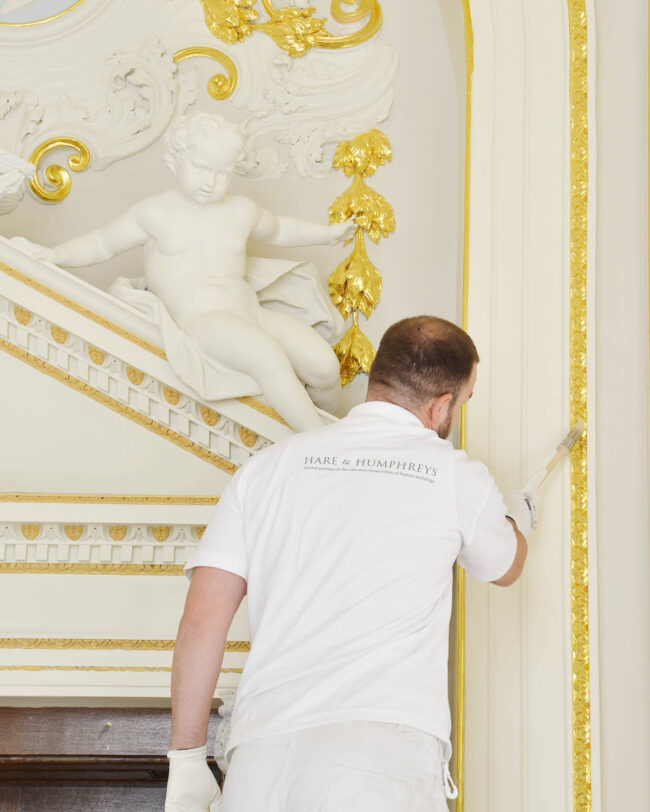
A Hare & Humphreys decorator finishing gilded mouldings beneath a plaster cherub

VII.How we work

How a commission comes together

  1. 01

    Conversation

    Tell us about the building, the brief and the timescale. We’ll arrange a visit and listen first.

  2. 02

    Research & samples

    Paint research where history matters, and sample boards made in our studio for you to approve.

  3. 03

    Proposal & programme

    A clear specification, method and price, with a programme that fits yours.

  4. 04

    Craft

    Our own painters, gilders and conservators on site or in the workshop, led by experienced foremen.

  5. 05

    Care

    A tailored maintenance programme keeps everything looking just finished, for years to come.

VIII.The studio

See it in the hand, not on a screen.

Finishes change with the light, the angle and the room. At our newly refurbished studio in Acton you can watch our artisans at work, handle finished samples and talk through your project with the people who will deliver it.

  • Bespoke sample boards for your scheme, and for projects all over the world
  • A comprehensive selection of our work to see and touch
  • Off-site making for specialist pieces
  • Where we train and develop our craftspeople
Hare & Humphreys Studio Building 46, Unit 2, Colville Road, Acton, London W3 8BL
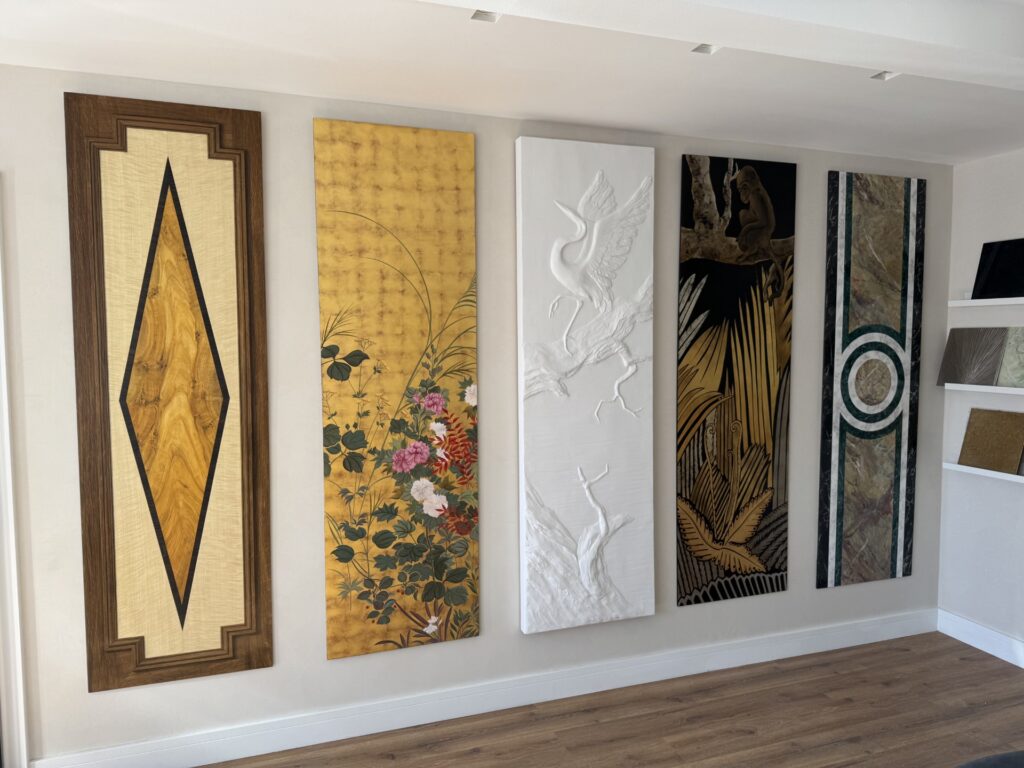
Finish samples displayed on the walls of the Hare & Humphreys studio: gilded panels, marbling and decorative papers
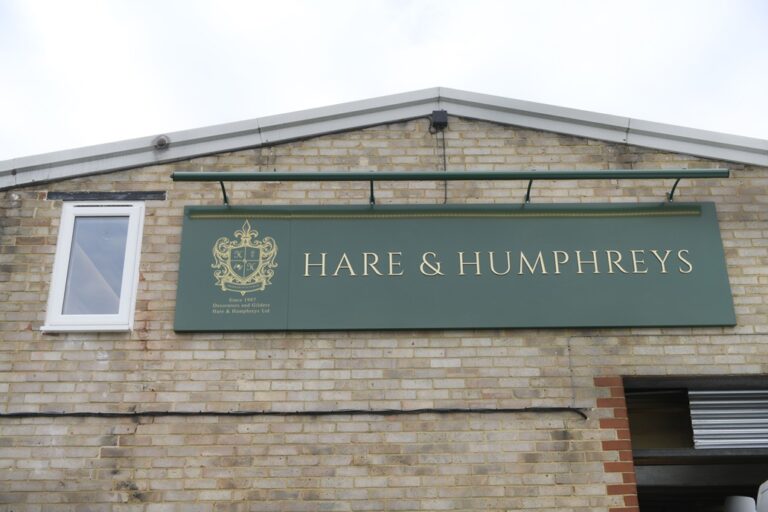
The Hare & Humphreys studio in Acton, with its green and gold sign
The Hare & Humphreys heraldic crest in gold, with the motto Prorsum in futurum
Our crest honours the history of our crafts, several of which appear in the shield. Set on our green livery, it is rendered in gold leaf, one of our key skills.

IX.Our story · “Forward to the future”

Prorsum in futurum

Nearly four decades of craft, carried forward. Our founding principles remain the same: quality, fairness, integrity and warm, attentive service.

  1. 1987

    Hare & Humphreys is founded in London.

  2. 2001

    Honoured with the Royal Warrant as Decorators and Gilders to HM Queen Elizabeth II, for our work at Windsor Castle.

  3. 2012

    Decorative and art works on Gloriana, the Queen’s row barge that led the Diamond Jubilee Pageant on the Thames.

  4. 2017

    Allied with Atelier Premiere London and its sister companies, sharing a commitment to craftsmanship, heritage conservation and passing on technical expertise.

  5. 2018

    The Great Pagoda’s dragons return to Kew, brought to life by our gilders.

  6. 2025

    New management, a newly refurbished studio in Acton, three rediscovered ceilings restored at the British Embassy in Paris and Richmond Theatre’s foyer returned to its former glory.

“Our founding principles of quality, fairness, integrity and a warm customer focussed service will remain implicit.”

Thomas Wallerand, Managing Director

X.Questions

Questions we’re often asked

Can’t see yours? Call 020 7833 8806 or email info@hare-humphreys.co.uk.

Do you work on listed and historic buildings?

Yes. Historic decoration and conservation is at the heart of what we do, from Lancaster House and Stationers’ Hall to the National Gallery and the Albert Memorial. Where the history of a scheme is uncertain, architectural paint research establishes the evidence before any work begins.

What is architectural paint research, and do I need it?

It’s the scientific study of a building’s paint layers. Samples are examined in cross-section under the microscope and their pigments and binders identified, revealing the original scheme and how it changed. If you’re restoring a historic interior, preparing a conservation management plan or applying for heritage funding, it’s usually the right first step.

Can I see samples before committing?

Of course. We make bespoke sample boards for your project, and you’re welcome to visit our studio in Acton to see finishes in person and meet the people who will carry out the work.

Do you only work in London?

No. We’re based in Kensington with our studio in Acton, and we work nationally and internationally. In 2025 we completed the restoration of three gilded and painted ceilings at the British Embassy in Paris.

Do you work with interior designers and main contractors?

Regularly. We’ve worked alongside designers including David Mlinaric, Jacques Garcia and Francis Sultana, architects such as Purcell and Julian Harrap Architects, and contractors including Willmott Dixon Interiors, Multiplex and Walter Lilly.

What kind of gold leaf do you use?

Genuine gold leaf, chosen for the setting. At Stationers’ Hall, for example, we used 23.5-carat leaf. We water gild where a burnished brilliance is wanted and oil gild where durability matters most.

Can you look after the work once it’s finished?

Yes. We offer tailored maintenance programmes so installations keep their just-finished appearance. At Lancaster House, for example, we carry out ongoing maintenance of the state rooms we have redecorated and gilded.

Are you recruiting?

We’re always pleased to hear from talented painters, decorators, gilders and conservators. We’re currently looking for an apprentice, skilled wallpaper hangers and an estimator. Email info@hare-humphreys.co.uk.

XI.Start a project

Tell us about your building.

Share a few details and the right person will come back to you, whether you’re restoring a listed interior or creating something entirely new.

OfficeHare & Humphreys Ltd
15 Young Street
Kensington, London W8 5EH
StudioBuilding 46, Unit 2
Colville Road, Acton
London W3 8BL
What kind of building is it?
What do you need? Choose any
Suggested first step

A conversation. We’ll arrange a site visit and talk through the brief with you.

We’ll only use your details to reply to your enquiry. Prefer to talk? Call 020 7833 8806.